How 4Creative found inspiration in initials
As Channel 4’s in-house agency unveils its new identity, Miketta Lane and David Wigglesworth chat to Jamie Madge about collaborative authorship, creative chaos, and resisting polished uniformity.
)


For creative departments, rebrands can often feel like a fresh coat of paint rolled out before the next pitch cycle. Neat. Tidy. Kinda bland.
But 4Creative doesn’t do normal.
Instead, for its newly unveiled identity, the agency has leaned into the slightly chaotic, collaborative and proudly unpindownable spirit that has long defined it.
Built around a constantly shifting system of bespoke ‘4C’ monograms created by everyone from apprentices to executive creative directors, the refresh pulls from decades of Channel 4 history while sidestepping simple nostalgia.
shots caught up with Miketta Lane, Director, and David Wigglesworth, Executive Creative Director & Creative Partner, to discuss collaborative authorship, resisting homogenisation, and why creative identities are often the hardest things to pin down.

Why did this feel like the right moment to rethink 4Creative’s identity, and why was it important that the process came from inside the team rather than being led externally?
Miketta Lane, Director: It’s been 10 years since we last looked at the 4Creative identity, so it felt overdue and, in all honesty, it didn’t really reflect who we are anymore. 4Creative has always been defined by the work and the people behind it, so it felt important that this wasn’t something imposed from the outside.
We wanted to make something that genuinely came from us; from our archive, our culture, our personalities and the way we actually work together every day.
A lot of agencies talk about collaboration, but this rebrand literally builds the identity from contributions by the whole team. Why was that important to you?
ML: We talk about collaboration a lot at 4Creative, and we wouldn’t get to do the work we do without it, internally and externally. Our incredible design team initiated the rebrand.
We weren’t interested in creating something overly polished or fixed because that’s not what 4Creative is.
This identity is built from our work, and it’s our people who drive, shape and make the work. It wouldn’t exist without contributions from everyone.
The ‘4C’ monogram system feels intentionally unfinished and ever-changing. Was there a conscious move away from the idea of a fixed logo? Was part of the thinking a reaction against the increasingly consolidated, homogenised feel of… ahem… big holding-company branding?
David Wigglesworth, Executive Creative Director & Creative Partner: We wanted something that represents our Altogether Different personality and continues to evolve as we do. We weren’t interested in creating something overly polished or fixed because that’s not what 4Creative is. The work here is constantly changing, and we wanted the identity to have that same sense of movement and unpredictability.
There probably is a bit of a reaction to the uniform feel of a lot of agency branding. Everything becoming flatter, cleaner, safer. We wanted to resist that and make something with more personality and elasticity.


How did you balance creating something recognisably connected to Channel 4 while still giving 4Creative its own personality?
ML: We’re all here because we care deeply about the Channel 4 brand. We didn’t want to separate ourselves from it anymore.
Bringing the logo back into the identity reflects our role as Channel 4’s creative partner, while the wider system gives us space to express the irreverence and unpredictability that defines 4Creative.
The new visual language pulls from decades of Channel 4 work, from Peep Show to The Great British Bake Off. How did you approach mining the archive without slipping into pure nostalgia? What were the gems that couldn’t be missed?
DW: Who doesn’t love a bit of Channel 4 nostalgia? But the archive allows us to show the range, craft and personality that has always existed within 4Creative. The best part was putting some of that decade-old work alongside our more recent campaigns for Educating Yorkshire and Dirty Business and seeing how consistent the output has remained throughout the years.
The exciting shift was moving away from something rigid and into something that feels truly alive.
Also, some of that older iconography feels strangely fresh once removed from its original context.
Was there a point during the process where the rebrand surprised even you?
ML: Probably how quickly everyone threw themselves into it.
The exciting shift was moving away from something rigid and into something that feels truly alive. Giving it a sense of authorship, where every individual can shape the ‘C’, turned it from an identity into a platform for our people.


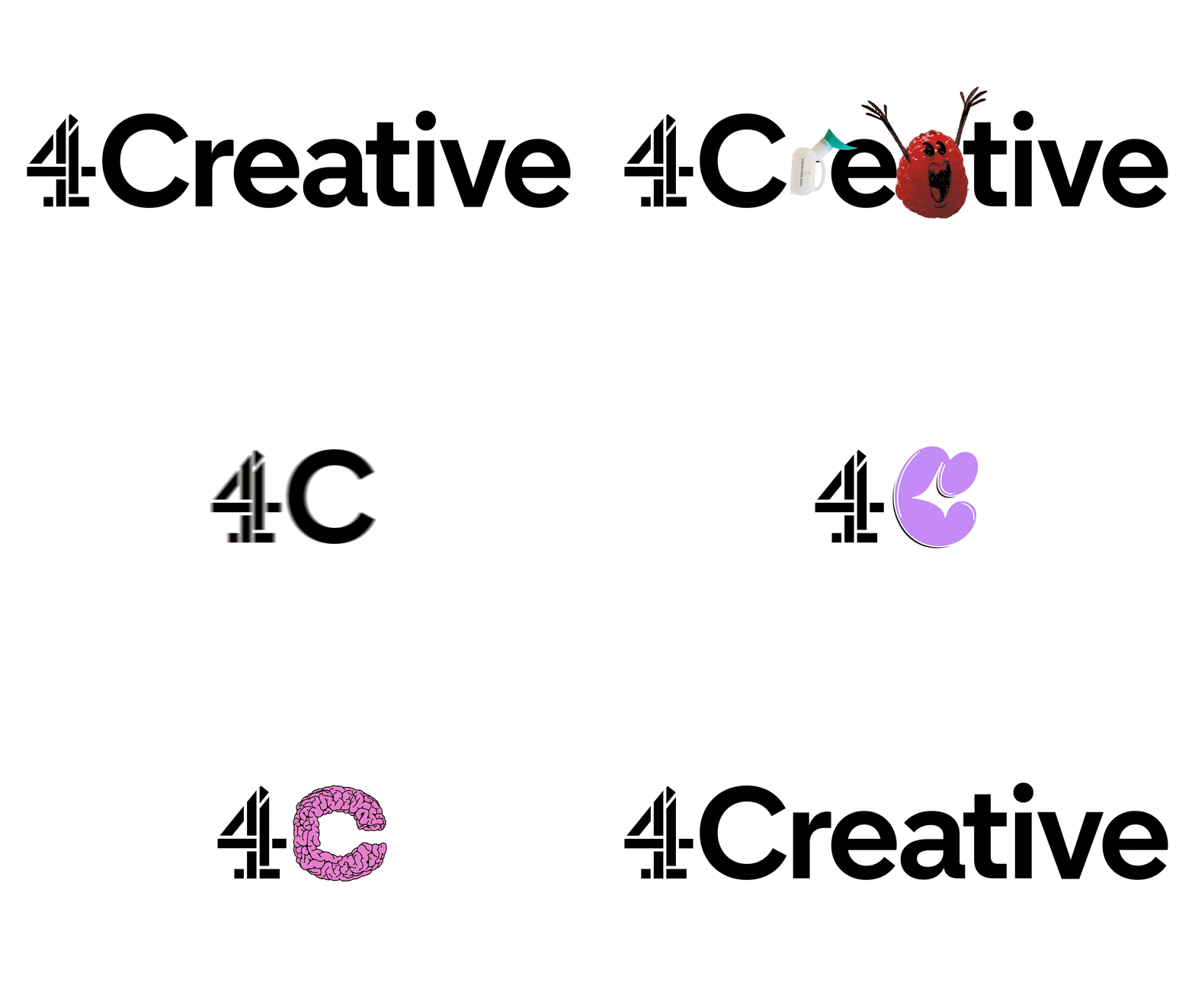
4Creative’s work often balances craft with irreverence. How do you translate a tone of voice like that into the typography, iconography and graphics?
DW: We didn’t want to overthink it. It’s a system that feels like it has a life of its own.
4Creative is at its best when it’s intentional, instinctive and a bit uncomfortable.
The evolving typography, the revolving monogram, the constant pull from our work all help it stay in motion. It keeps the craft but never lets it become predictable.
Looking back at 4Creative’s history, what elements of its DNA did you feel absolutely had to survive into this new era?
ML: The sense that 4Creative doesn’t feel fixed or overly corporate.
4Creative is at its best when it’s intentional, instinctive and a bit uncomfortable.
That had to survive.

How do you see the identity evolving over time as new people join and contribute their own versions of the ‘4C’?
DW: That’s the best part. The identity is designed to keep changing as the department changes.
It will grow and change as we do.
New people will join, contribute their own 4Cs and gradually reshape it over time. It’s intentionally unfinished. It will grow and change as we do.
What’s the importance of a successful rebrand for a creative department? Is it about recognition externally, or belief internally?
ML: Internal belief is everything. It sets the standard, sharpens the ambition, and signals intent.
If we get that right, external recognition follows.

